
Key takeaways
- How many people fit in a limousine depends on approved passenger seats, luggage, clothing and boarding needs.
- The chauffeur’s seat should be excluded when calculating passenger places for a group.
- Belle Classic’s Chrysler wedding arrangement accommodates 10 guests alongside a dedicated bridal car.
- Belle Classic offers a luggage wagon for additional airport luggage space.
- Wheelchair travel requires checks covering boarding, securement, transfers, equipment storage and remaining passenger places.
- Written booking records should identify the exact vehicle, passenger limit, luggage arrangements and access requirements.
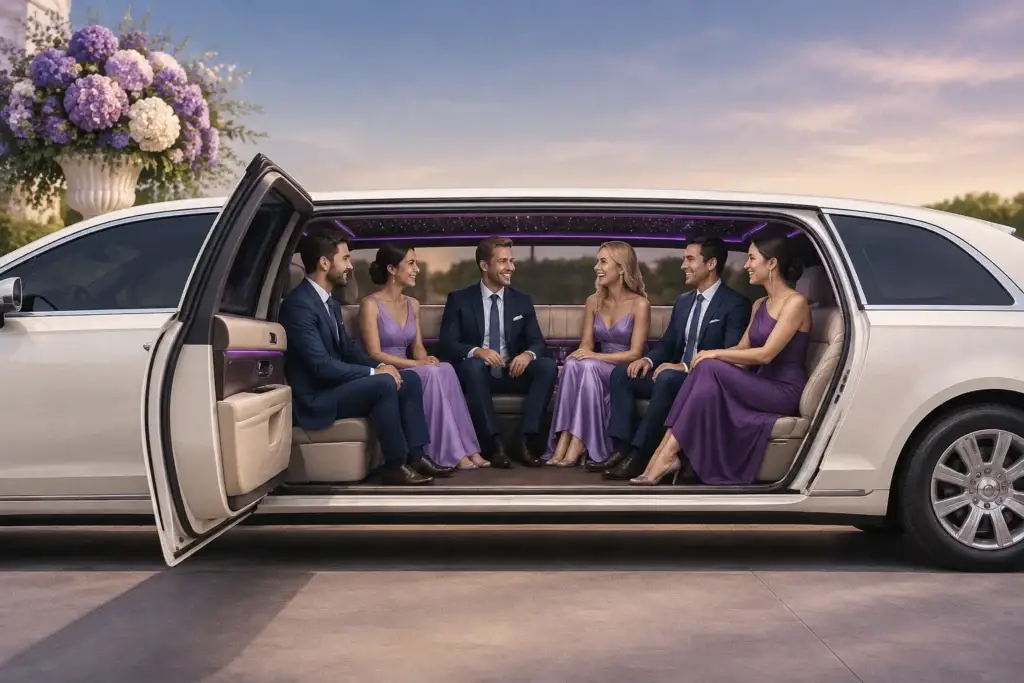
How many people fit in a limousine comfortably depends on its passenger seating, cabin layout and luggage space; the chauffeur occupies a separate driving position and should not count towards your group’s seats. Our Chrysler limousine wedding combination accommodates 10 guests alongside a dedicated bridal car. That example applies to the stated arrangement, not every limousine.
Wedding outfits, airport bags and boarding needs can change the right vehicle choice before anyone takes a seat. A cabin that works for a school ball group may feel cramped with bulky dresses or holiday luggage. Start with passenger numbers, seating layout, belongings and access needs, then choose the style that makes your arrival special.
How does vehicle configuration determine how many people fit in a limousine?
Limousine passenger capacity belongs to the exact vehicle, rather than its category name. Sedan limousines, stretches, luxury SUVs, stretch SUVs, luxury vans and limo buses have different cabin designs. Passenger figures should describe guest seats separately from the chauffeur’s position. Neither a long body nor a large exterior proves how much usable space each guest receives.
A sedan limousine retains a car-style cabin, while a stretch limousine uses an extended body. Luxury SUVs offer a different body shape, but their seating rows and luggage areas still determine usable space. Stretch SUVs add length without creating a universal passenger limit. Luxury vans and larger limo buses or party buses use other cabin arrangements, so their names alone cannot settle capacity.
The exact model and seating configuration determine a stretch limousine’s passenger capacity. Custom interiors, seating changes and fittings can alter how passengers share the cabin. Apply any advertised number only to the vehicle it describes.
The commonly quoted six-to-ten-passenger stretch limousine range spans different configurations; it is not a universal legal limit or comfort guarantee. Our documented Chrysler arrangement supports the 10-guest figure, not a six-passenger configuration or a numerical limit for other vehicle categories.
Those general categories also differ from our advertised fleet. At Belle Classic Limousines, we offer Chrysler limousines, Rolls Royce vehicles, Jaguar Mk5 wedding cars and the REO SpeedWagon. Choose from the actual vehicle options rather than assuming every transport category forms part of our service.
How many people fit beyond the advertised seat count?
An advertised passenger count gives you a starting point, but comfortable occupancy also depends on who travels and what they carry. Our Chrysler limousine and dedicated bridal car combination accommodates 10 guests in the limousine, with a separate car for the couple. The arrangement shows how coordinated vehicles can serve different passenger needs without putting everyone into the same cabin.

A maximum seating figure does not promise equal comfort for every event. Passengers need room to sit naturally, reach their restraints and keep personal items clear of neighbouring seats. Formalwear can spread across a seat, while a rigid bag can obstruct foot space. Neither item changes the passenger limit, but both affect the experience.
Compare legal capacity and comfortable occupancy as separate decisions. The first concerns the vehicle’s permitted passenger places and applicable transport requirements. The second concerns usable space for your particular group. Comfort can justify fewer occupants, but it never justifies exceeding the permitted limit.
Passenger count wording: A useful vehicle description separates guest seats from the chauffeur’s seat. A total occupant figure that combines both can overstate the space available to your group.
Seating layout, safety and boarding shape usable space
A limousine’s seating layout affects legroom, restraint use and the route between the door and each seat. Forward-facing rows and perimeter seating distribute people differently, even within similarly sized vehicles. Door access also matters because every passenger must reach an appropriate place. Treat the cabin as a working seating arrangement, not just a photograph of an attractive interior.
Forward-facing seats and perimeter seating
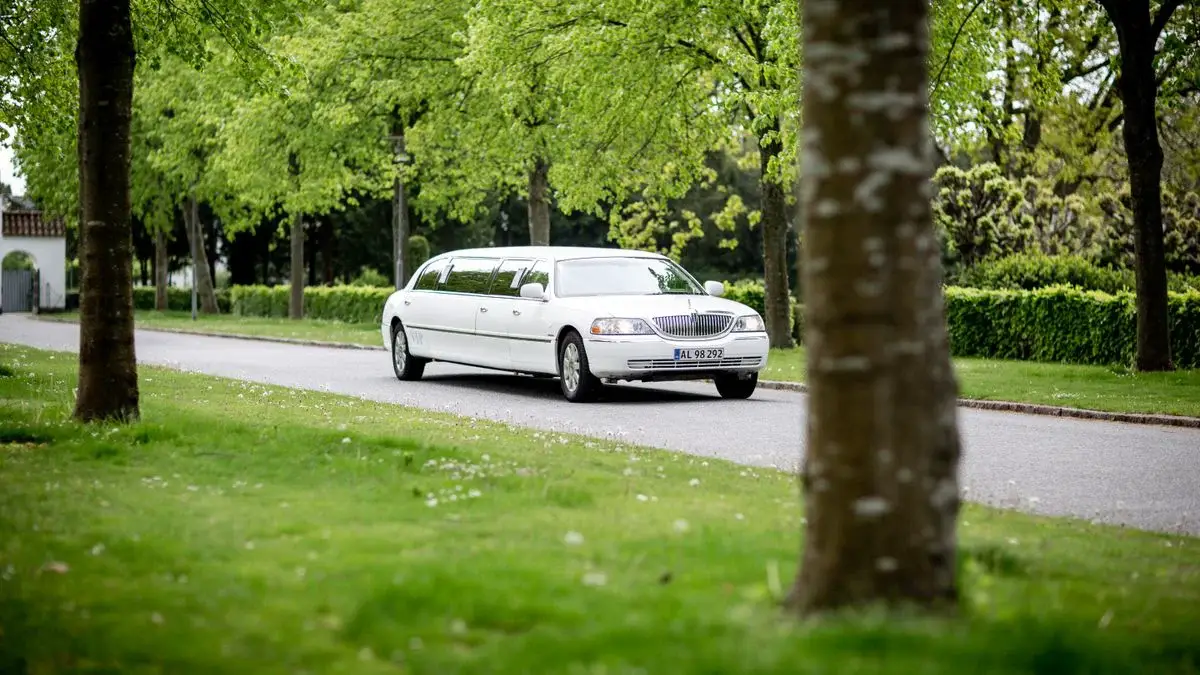
Forward-facing seats place passengers in rows facing the direction of travel. Perimeter seating runs around parts of the cabin, often changing where passengers place their feet and bags. Facing seats may share central legroom, so an open-looking floor area does not necessarily offer spare storage. Interior fittings can further reduce that shared space.
Conceptual layout diagrams — not vehicle seating plans: These show spatial relationships only; the labels do not represent seat numbers or approved configurations.
Forward-facing: Direction of travel → Chauffeur position | Passenger rows facing forward | Separate luggage area where provided. Annotation: the chauffeur is outside the guest count.
Perimeter: Passenger seating ↔ Shared central legroom ↔ Facing passenger seating. Door → Clear boarding route. Annotation: shared floor space is not automatically luggage storage.
Vehicle modifications deserve the same attention as the original body style. A changed seating arrangement can alter access, restraint positions and the number of usable passenger places. An interior image helps explain the layout, but it cannot establish the vehicle’s permitted capacity. Match seating information to the exact vehicle rather than a similar model.
Perth passenger limits, seatbelts and child restraints
Local transportation regulations are the Western Australian rules governing passenger transport operation, vehicle approval and road safety. For example, an altered seating layout must not be treated as permission to carry extra passengers. Before confirming a booking, we need to establish the exact vehicle’s approved passenger limit, applicable transport requirements, seatbelt provision and suitability of seating positions for the passengers travelling.
Children still need their own appropriate passenger arrangements; sharing an adult’s space does not create an extra seat. Child restraint compatibility depends on the seating position and the restraint’s installation requirements. Group planning should identify children’s ages and restraint needs before assigning seats. Do not assume that every limousine interior supports the same installation.
Boarding access and wheelchair-related seating changes
Boarding comfort depends on doorway clearance, step height and the route to the chosen seat. A wide-looking cabin can still present a difficult entrance for someone with limited mobility. Wedding skirts and long dresses can also make turning through a doorway awkward. Our garage viewings let you compare vehicles beyond their exterior style.
Wheelchair travel involves more than space for a folded chair. Remaining seated in a wheelchair requires a suitable vehicle arrangement, including appropriate access and securement. Transferring to a passenger seat creates different needs, such as transfer space and chair storage. Any changed seating arrangement must retain suitable passenger places for everyone else.
Before confirming an arrangement involving mobility needs, we need to establish boarding suitability, whether travel involves a transfer or remaining in the wheelchair, and how equipment storage or seating changes affect the remaining passenger places.
Allow room for luggage, formalwear and event essentials
Comfortable limousine occupancy depends on everything travelling with your passengers, not just the head count. Bags, wedding clothing, work equipment and mobility aids each need suitable space. Keep passenger seats, footwells and boarding routes available for their intended use. The most useful booking description therefore explains the people and their belongings together.
Weddings, school balls and special occasions
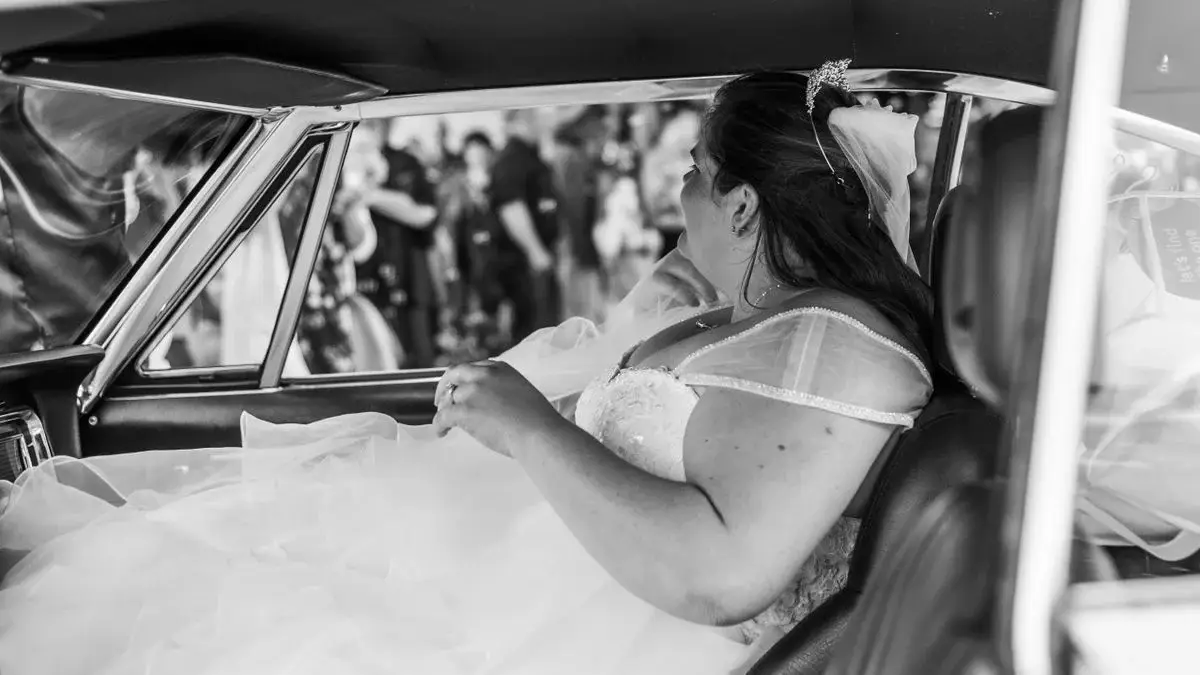
Wedding transport needs room for clothing as well as people. A full skirt, long train, bouquet and garment bag create different demands from ordinary daywear. Ceremony venues also shape boarding plans because kerbs, steps and the stopping area affect access. A separate bridal car can give the couple space while the bridal party shares a limousine.
For a wedding with 10 guests travelling together and the couple travelling separately, start with our Chrysler limousine and dedicated bridal car arrangement. Assign the couple’s full skirt, train and bouquet to their car’s space assessment; assess the guests’ formalwear and garment bags against the limousine’s usable seating and storage. If bags obstruct seating or a guest cannot board suitably, the head count alone does not settle the booking: redistribute belongings or select another vehicle combination. Final confirmation needs to identify both vehicles, passenger allocation, agreed luggage arrangements and any access-related seating changes. Our classic options include the Jaguar Mk5 for a classic wedding arrival.
School ball groups need a clear passenger plan for each part of the evening. Our Chrysler limousines serve school balls, and we offer after-party transfers by prior arrangement. A return group may differ from the outbound group, so assign seats to each leg separately. Birthdays and anniversaries benefit from the same approach when family members join at different stops.
Airport transfers, corporate events and Swan Valley outings
Airport transfers expose the difference between passenger space and luggage space. A group that fits comfortably with handbags may need another arrangement with suitcases and cabin bags. We offer a luggage wagon for additional airport luggage space when families or friends travel together. Describe large or awkward items individually rather than using only a bag total.
Corporate groups may bring laptops, presentation materials or display items. Those belongings need suitable storage without occupying the passenger places required by colleagues. Swan Valley wine tour groups have a different pattern: personal bags travel out, and purchases may travel back. Plan storage around the return load as well as the first pickup.
We customise Swan Valley tours around preferred venues and tastes, organise the schedule and book the venues. Transport planning should therefore consider the full outing rather than a single arrival. Keep room for belongings throughout the day, especially when several people share the passenger cabin. Choose capacity for the fullest planned leg, not the lightest.
Choose a vehicle arrangement that fits the whole group
Your group needs a different arrangement when suitable seats, safe storage or boarding access become tight. That may mean choosing another limousine configuration or combining vehicles from our fleet. More exterior length does not automatically solve a luggage or access problem. Match the arrangement to the constraint instead of choosing by appearance alone.
For a couple seeking a classic wedding arrival, a dedicated car keeps their seating needs separate from the bridal party. For a larger wedding group, our limousine-and-bridal-car combination offers a coordinated approach. Airport passengers need storage planned alongside seats, while corporate passengers need space for work items. Each choice starts with a different practical priority.
Compare passenger needs and record the arrangement
Use these comparisons when assessing how many people fit in a limousine comfortably:
- Compare the exact vehicle’s guest seats, excluding the chauffeur, with everyone travelling on each leg.
- Match the cabin layout to clothing, shared legroom and access to each seating position.
- Consider luggage and mobility equipment separately from passenger seating.
- Allow for different passenger lists and belongings on the outward and return transfers.
- Consider coordinated cars when separate groups need different space or arrival arrangements.
A useful written booking record identifies the exact vehicle and its agreed passenger limit, separately from the chauffeur. The record also describes the route, luggage arrangements and any child restraint or access needs. Where a seating change affects capacity, the record should describe the resulting arrangement. That gives the passenger plan a clear reference without relying on a generic vehicle category.
Send us your event date, passenger numbers, pickup and destination details, luggage description and any boarding needs with your enquiry. We offer customised wedding transport packages and vehicle combinations. The right arrangement accounts for the whole booking, including the people who join or leave at later stops.
Give every passenger a usable place
The best answer to how many people fit in a limousine comes from matching permitted seats to the actual event. Passenger numbers establish the starting requirement; clothing, storage and access determine whether the arrangement feels comfortable. Keep those decisions together, and a luxury arrival can remain relaxed from the first pickup to the final drop-off.
FAQ
How many people fit in a stretch limo?
The limit depends on the exact configuration. Our wedding arrangement includes a Chrysler limousine for 10 guests alongside a dedicated bridal car; that figure does not apply to every stretch.
When should you leave passenger places unused?
Choose fewer occupants when formalwear, belongings or access needs prevent guests from sitting naturally and using their restraints comfortably.
How many people can sit in a limousine?
Use the exact vehicle’s passenger seating figure, excluding the chauffeur. Visible cushions or continuous upholstery do not establish approved passenger places.
Do children count towards limousine passenger capacity?
Yes. Children need appropriate passenger places and restraint arrangements within the seating limit. Their ages and restraint installation needs affect which positions are suitable.
How many people fit in a limo bus?
A limo bus or party bus has a vehicle-specific seating limit, not a standard category capacity. Our group arrangements centre on our available cars and limousines, including coordinated combinations.
Choose your preferred vehicle style and share the passenger, luggage and access details with us. Explore our hire options and request a tailored quote for transport that fits your occasion.